Florida argued the two states were undermining public safety by allowing individuals without legal immigration status — and, in some cases, insufficient English-language proficiency — to obtain commercial trucking licenses despite federal standards intended to govern interstate transportation safety.
The dispute gained national attention after a deadly 2025 crash on the Florida Turnpike involving an undocumented truck driver reportedly licensed through California or Washington.
According to the lawsuit, the driver allegedly made an illegal U-turn and was unable to properly interpret roadway signage, resulting in a collision that killed three people.
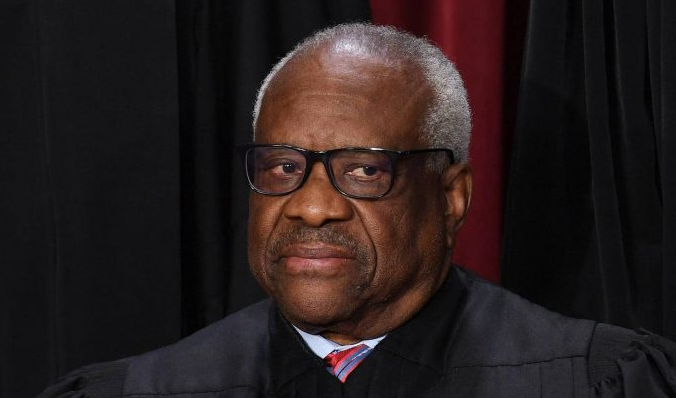
Joined by Justice Samuel Alito, Thomas argued the high court had a constitutional obligation to hear the interstate dispute because Florida had no other legal forum available to challenge another state’s policies.
The court’s majority denied Florida’s request without explanation.
The case underscores the growing national clash over immigration enforcement, state licensing authority, and whether states with looser immigration policies are creating broader public safety consequences for the rest of the country.
Thomas ripped the majority for refusing to hear the lawsuit since disputes between states can only be brought before the Supreme Court.
“If this Court does not exercise jurisdiction over a controversy between two States, then the complaining State has no judicial forum in which to seek relief,” Thomas wrote.
Thomas argued that Florida’s allegations against California and Washington raised serious public safety concerns, warning that failures to properly follow federal commercial driver licensing (CDL) laws can create dangerous conditions on American roadways.
Thomas pointed to the fatal Florida highway crash involving truck driver Harjinder Singh, who he said “could not read the road signs,” and argued Florida deserved a chance to pursue its claims.
Two blue states – California and Washington – issued Singh a CDL.
“An illegal alien who cannot read English road signs cannot drive an 80,000-pound tractor-trailer,” Thomas wrote.
“Federal law and regulations prohibit States from providing commercial driver’s licenses to applicants unless they pass a driver’s test, sufficiently understand the English language, and show appropriate immigration status,” he added.
Thomas argued that while the Supreme Court of the United States may have broad discretion when deciding whether to hear ordinary appeals, disputes between states occupy a different category because the Constitution grants the high court exclusive jurisdiction over those cases.
“We have no more right to decline the exercise of jurisdiction which is given, than to usurp that which is not given,” Thomas wrote.
He also accused the court of failing to follow the Constitution by refusing to hear disputes between states.
“This Court has adopted a discretionary approach to its exclusive original jurisdiction based on policy judgments that are in conflict with the policy choices that Congress made in the statutory text,” Thomas wrote.
Thomas argued that if Florida, California, and Washington were separate sovereign nations rather than American states, a dispute involving one government allegedly allowing unsafe drivers into another jurisdiction could trigger major diplomatic conflict.
Thomas suggested that in an international context, such disputes would likely be addressed through international courts, treaties, or direct government action.
“By entering the Union, States agree to instead have such disputes resolved by this Court,” he wrote.
The issuance of commercial driver’s licenses to non-citizens came under increased scrutiny from the Department of Transportation last summer following a series of deadly crashes involving undocumented immigrant truck drivers.
Last September, Transportation Secretary Sean Duffy announced stricter federal requirements for non-citizens seeking commercial driver’s licenses, part of a broader push by the Trump administration to tighten transportation and immigration enforcement standards, Fox News reported.
Duffy also warned that California could risk losing federal transportation funding if the state continued allowing commercial licenses to remain active for individuals deemed ineligible under revised federal guidelines.