For months, investigators have insisted the evidence collected after the assassination of Charlie Kirk would paint a clearer picture of what happened on the day the conservative activist was gunned down.
Now, testimony presented in open court is clarifying that investigation, with prosecutors unveiling forensic evidence they believe strengthens their case while the defense continues challenging its reliability.
Advertisement
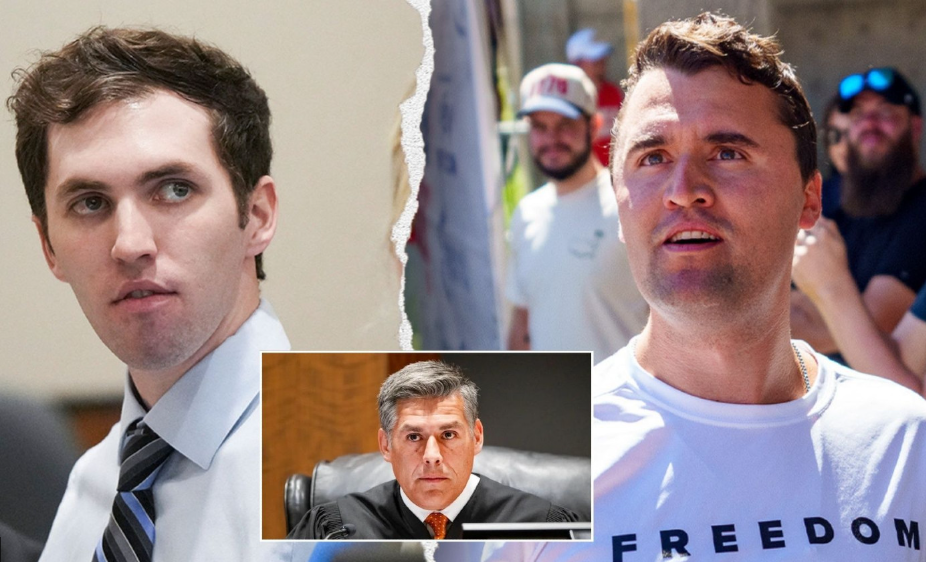
A Utah investigator testified Tuesday that DNA belonging to Tyler Robinson’s former roommate and romantic partner was found on key pieces of evidence recovered after the Sept. 10, 2025, assassination of Turning Point USA founder Charlie Kirk at Utah Valley University.
The testimony came during the second day of Robinson’s preliminary hearing in Provo as prosecutors continued presenting evidence supporting charges that Robinson fatally shot Kirk during a campus event.
Jennifer Faumina, a sergeant with the Utah Department of Public Safety who was assigned to the State Bureau of Investigation at the time of the shooting, read portions of a DNA analysis from the witness stand.
Advertisement
According to Faumina, investigators identified male DNA belonging to Robinson’s former roommate and romantic partner, Twiggs, on two significant items recovered during the investigation.
“Male DNA was obtained from item 7-1. Item 7-1 was interpreted as originating from two individuals, one of whom is Twiggs,” Faumina testified.
Advertisement
She later added, “Male DNA was obtained from item eight sub one. Item eight sub one was interpreted as originating from two individuals, one of whom is Twiggs.”
Those items were identified in court as a screwdriver recovered from the rooftop of the Losee Center for Student Success and a towel that had been wrapped around the rifle allegedly used in the shooting.
According to the Associated Press, FBI analyst Amanda Bakker also testified about DNA evidence linking both Robinson and Twiggs to the towel recovered by investigators.
Robinson’s defense team disputed the DNA evidence during the hearing and questioned the reliability of the forensic testing.
Earlier testimony came from Officer Chris Bagley of the Utah Valley University Police Department, who told the court he discovered the screwdriver on the rooftop where prosecutors allege the fatal shot was fired.
Bagley also testified that he found impressions in the rooftop gravel resembling what he described as a “sniper’s pad.”
According to his testimony, the impressions appeared consistent with someone lying in a prone position.
Prosecutors contend the rooftop provided a clear line of sight to the location where Kirk was speaking during the Turning Point USA event.
Jurors also heard that surveillance video allegedly tracked Robinson’s movements across the campus before and after the shooting, including footage prosecutors say showed him on top of the Losee Center.
The prosecution has further alleged that surveillance cameras captured Robinson’s vehicle leaving the university after the attack.
Advertisement
Twiggs has emerged as a significant figure in the investigation, although he has not been charged with any crime.
Prosecutors have also alleged that Robinson provided Twiggs with a written confession following the shooting.
The court is expected to hear a previously recorded statement from Twiggs later during the weeklong preliminary hearing.
Robinson has not yet entered a plea in the case.
He faces aggravated murder and multiple additional felony charges, and prosecutors are seeking the death penalty if he is ultimately convicted, Trending Politics reported.
The latest testimony added another significant piece to the prosecution’s case, placing Twiggs’ DNA on evidence investigators say is connected to both the alleged weapon and the rooftop location where they believe the fatal shot originated.
The hearing this week is a preliminary hearing, not the actual trial.
Its primary purpose is for the judge to determine whether prosecutors have presented enough evidence (probable cause) for Tyler Robinson to stand trial on the charges, including aggravated murder in the killing of Kirk.
The judge is not deciding guilt or innocence at this stage.