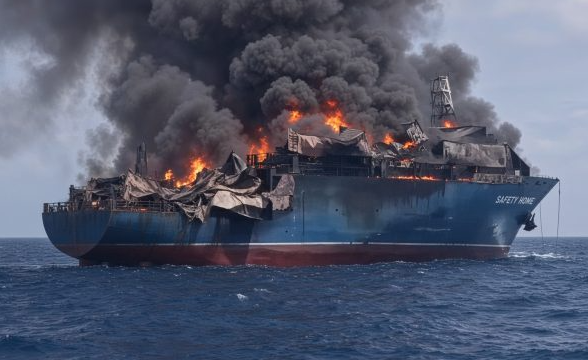
DUBAI — Tensions across the Middle East have intensified following reports that an Iranian attack targeted a Singapore-flagged commercial vessel, renewing concerns about the safety of international shipping through some of the world’s most strategically important waterways.
Information about the incident remains limited. Authorities have not yet released a complete assessment of the vessel’s condition, confirmed the extent of any damage, or disclosed whether crew members were injured or killed. The circumstances surrounding the reported attack also remain under investigation.
The incident has nevertheless attracted international attention as shipping companies, maritime authorities, and governments monitor the increasingly unstable security environment in the region.
Iran Issues Warning to Commercial Vessels
Following the reported attack, Tehran issued a warning to commercial ships operating near waters it considers part of its military activity. The message urged vessels to avoid designated areas and warned that ships entering those zones could face serious consequences.
“Stay out of our routes… you alone will bear the responsibility,” the warning reportedly stated.
The statement has raised concerns that commercial vessels could become more vulnerable as military tensions involving Iran and regional adversaries continue to escalate. Although the warning did not establish that additional attacks were imminent, it added to uncertainty for operators navigating nearby sea lanes.
Maritime security specialists have long warned that threats against civilian shipping can create wider disruptions, even when individual incidents cause limited physical damage. Companies may respond by changing routes, increasing security measures, delaying voyages, or seeking additional insurance coverage.
Strait of Hormuz at Center of Concern
The reported incident has placed renewed focus on the Strait of Hormuz, the Gulf of Oman, and surrounding maritime routes. These waters form a vital link between major energy-producing states in the Persian Gulf and international markets.
The Strait of Hormuz is one of the world’s most important energy chokepoints. Large volumes of crude oil, refined petroleum products, liquefied natural gas, and other commercial goods pass through the region. Any prolonged disruption could affect global fuel supplies, shipping schedules, and the cost of transporting goods.
Even without a complete closure of the waterway, heightened security risks could increase insurance premiums and operating expenses. Ships may also face longer journeys if operators decide to avoid areas considered vulnerable to attack or military confrontation.
Such changes could affect industries far beyond the Middle East. Higher freight costs may place additional pressure on manufacturers, retailers, and consumers, while instability in energy shipments could contribute to fluctuations in oil and gas prices.
International Monitoring Intensifies
Several countries have previously deployed naval forces to protect commercial shipping in the region. If threats against merchant vessels continue, governments may consider expanding patrols, improving surveillance, or coordinating additional measures to protect crews and cargo.
Singaporean authorities are expected to follow developments closely because of the vessel’s flag and the country’s major role in global maritime trade. International maritime agencies and shipping operators are also likely to examine available information as investigators work to establish what occurred.
The reported warning from Tehran could further complicate navigation decisions for commercial operators. Shipping companies must balance the need to maintain trade routes with their responsibility to protect personnel and vessels in waters affected by military activity.
Economic Risks Extend Beyond the Region
Security analysts caution that any expansion of hostilities into major maritime corridors could have consequences well beyond the battlefield. Disruptions to shipping can affect energy markets, supply chains, cargo deliveries, and international trade.
Authorities are urging vessels operating near the affected waters to remain vigilant, follow official navigation advisories, and maintain communication with maritime security agencies.
As investigations continue, governments and shipping companies are closely monitoring the situation for signs of further escalation. The reported attack remains an important development in the wider regional crisis, but key details—including the vessel’s condition, the precise circumstances of the incident, and any potential casualties—have yet to be independently confirmed.