MONTGOMERY, AL — In a legal maneuver that has sent a tectonic shockwave through the American judicial system, the United States Department of Justice has launched an unprecedented criminal prosecution against one of the nation’s oldest and most formidable civil rights organizations. The Southern Poverty Law Center (SPLC), a group that has spent fifty-five years as the primary tracker of the Ku Klux Klan and neo-Nazi cells, now finds itself in the crosshairs of the very government it once assisted.
The Trump administration’s DOJ has dropped a staggering 11-count federal indictment against the SPLC, alleging that the organization did not dismantle extremist groups, but instead manufactured the very extremism it purports to oppose.
The accusations are as explosive as they are bizarre: federal prosecutors claim the SPLC funded KKK chapters and Aryan Nation networks, not to infiltrate them for law enforcement purposes, but to stoke racial violence to fuel their own multi-million dollar fundraising machine. But as the case moves into a federal courtroom in Alabama, a different story is emerging—one that suggests the “manufacturing” might be happening inside the DOJ itself.
I. The Allegation: “Manufacturing Racism”
The firestorm began when Acting Attorney General Todd Blanche appeared on national television to justify the indictment. His words were clinical and cutting: “The SPLC is manufacturing racism to justify its own existence.”
The DOJ’s theory, supported by senior advisor Kash Patel, posits that the SPLC used “dark money” to pay informants who were essentially acting as agents provocateurs. The indictment includes:
-
Six counts of wire fraud.
-
Four counts of bank fraud.
-
One count of conspiracy to commit money laundering.
“They weren’t tracking hate; they were subsidizing it,” Patel claimed during a briefing in Washington, D.C. “They paid these groups to create a problem so they could turn around and ask New York donors for more money to solve it.”
To the casual observer, if true, this would be the greatest nonprofit scandal in American history. However, the SPLC’s legal team, led by some of the most respected criminal defense attorneys in New York and Los Angeles, has begun filing responses that turn the mirror back on the government.

II. The Receipts: Intelligence Handoffs and FBI Meetings
The backbone of the government’s case is the claim that the SPLC kept their “paid informants” a secret from law enforcement. Todd Blanche stated bluntly, “There is no information that we have that suggests they shared what they learned with law enforcement.”
But official court filings signed under penalty of perjury tell a different story. The SPLC has produced evidence of a documented “Intelligence Pipeline” that was active for years:
-
The Charlottesville Warning: Before the “Unite the Right” rally in 2017, the SPLC provided the FBI’s Mobile, Alabama field office with a detailed dossier naming specific individuals likely to incite violence.
-
The DOJ Briefings: Earlier this year, before the indictment was handed down, SPLC officials held two separate meetings with federal prosecutors where they disclosed the full scope of their informant program.
-
The Criminal Conviction: In at least one high-profile case in Ohio, intelligence gathered by an SPLC informant led directly to the federal conviction of a violent extremist.
“If we were running a criminal scheme to secretly fund terrorists,” an SPLC attorney argued in court, “why would we voluntarily hand the FBI the keys to put those same terrorists in prison? The DOJ’s logic collapses under the weight of its own records.”
III. The Nuclear Option: Demanding the Grand Jury Transcripts
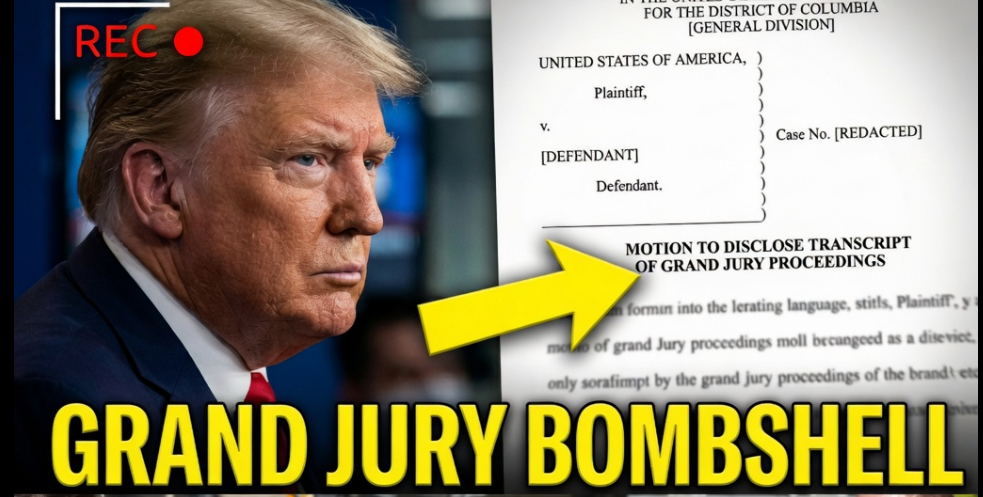
In a move that almost never happens in American law, the SPLC has filed a motion demanding the full transcript of the grand jury proceedings.
Under Federal Rule of Criminal Procedure 6(e), grand jury proceedings are strictly secret. However, an exception exists for “particularized irregularities.” The SPLC is accusing the DOJ of actively weaponizing the grand jury. They argue that prosecutors likely lied to the jurors, claiming the SPLC never shared information with the FBI, despite having the hand-receipts to prove otherwise.
“This wasn’t an investigation,” said legal analyst Harry Litman. “This looks like a political hit job dressed up in a suit and tie. You cannot bring a fraud case without a single victim. The DOJ hasn’t produced one donor from Chicago or LA who says they were deceived. In a real fraud case, the victims are the star witnesses. Here, they are non-existent.”
IV. The Presidential Interference: Prejudicing the Jury Pool
While the legal battle rages in the courts, the rhetoric has escalated on social media. The President recently posted: “Southern Law, whatever it is, has given money to the KKK. They’re supposed to protect people.”
Legal experts in New York warn that such comments from a sitting President during an active prosecution are more than just “embarrassing”—they are a direct threat to the Sixth Amendment right to a fair trial. By labeling the defendant a “KKK funder” before a single witness has been called, the Executive Branch is being accused of “poisoning the jury pool” in Alabama.
V. The Pattern: A Broader Campaign Against Dissent
Civil rights groups from the NAACP to the Anti-Defamation League are watching the Montgomery courtroom with bated breath. The precedent being sought by the DOJ is terrifying to many investigative organizations.
The government’s argument is that if a nonprofit uses paid sources to gather intelligence on criminal groups without publicly announcing the practice to every donor, it is committing wire fraud. If this holds, it doesn’t just kill the SPLC; it kills undercover journalism and anti-corruption watchdogs in every state from California to Florida.
Observers point to a clear pattern:
-
Step 1: The SPLC puts groups like “Moms for Liberty” on their hate-watch list.
-
Step 2: Senior officials publicly cut ties between the FBI and the SPLC.
-
Step 3: Congressional hearings are convened to “examine” nonprofit funding.
-
Step 4: A federal indictment is issued.
“This is the opening salvo of a campaign to dismantle the organizations that stand in the way of radical political movements,” noted a spokesperson for Democracy Docket.
VI. The Stand in Montgomery: May 5th Deadline
As of today, U.S. Magistrate Judge Kelly Fitzgerald Pate has ordered the DOJ to respond to the SPLC’s motions by May 5th. The SPLC is simultaneously preparing a motion to dismiss the entire case, calling the legal deficiencies “obvious and serious.”
The mood in Montgomery—the birthplace of the Civil Rights Movement—is one of defiant resilience. Interim CEO Brian Far issued a statement that has become a rallying cry for the organization’s supporters in New York, Ohio, and beyond:
“For 55 years, the SPLC has been a beacon of hope against white supremacy. We are unsurprised to be the latest target of an administration that has made no secret of who it wants to protect and who it wants to destroy. We will not be intimidated into silence. We have the truth, and we have the receipts.”
Conclusion: A River of Accountability
The case of United States v. Southern Poverty Law Center is no longer just about wire fraud or bank records. It is a fundamental test of the American Republic. It asks whether the Department of Justice can be used as a political weapon to decapitate organizations that monitor extremism.
If the court orders the unsealing of the grand jury transcripts, the American public may finally see what was said behind those closed doors. Until then, the nation remains divided, watching a 55-year-old institution fight for its life against the very government it once considered a partner in the pursuit of justice.
What do you think? Is this a legitimate pursuit of fraud, or a dangerous precedent for American civil society? Leave your thoughts in the comments below. Stay tuned, stay discerning, and stay close to the facts.