SAVE Act Voter ID Debate Expands in Congress
The SAVE Act voter ID proposal has become a central issue in the debate over U.S. election rules. The legislation would require voters to present identification and proof of citizenship to register for federal elections.
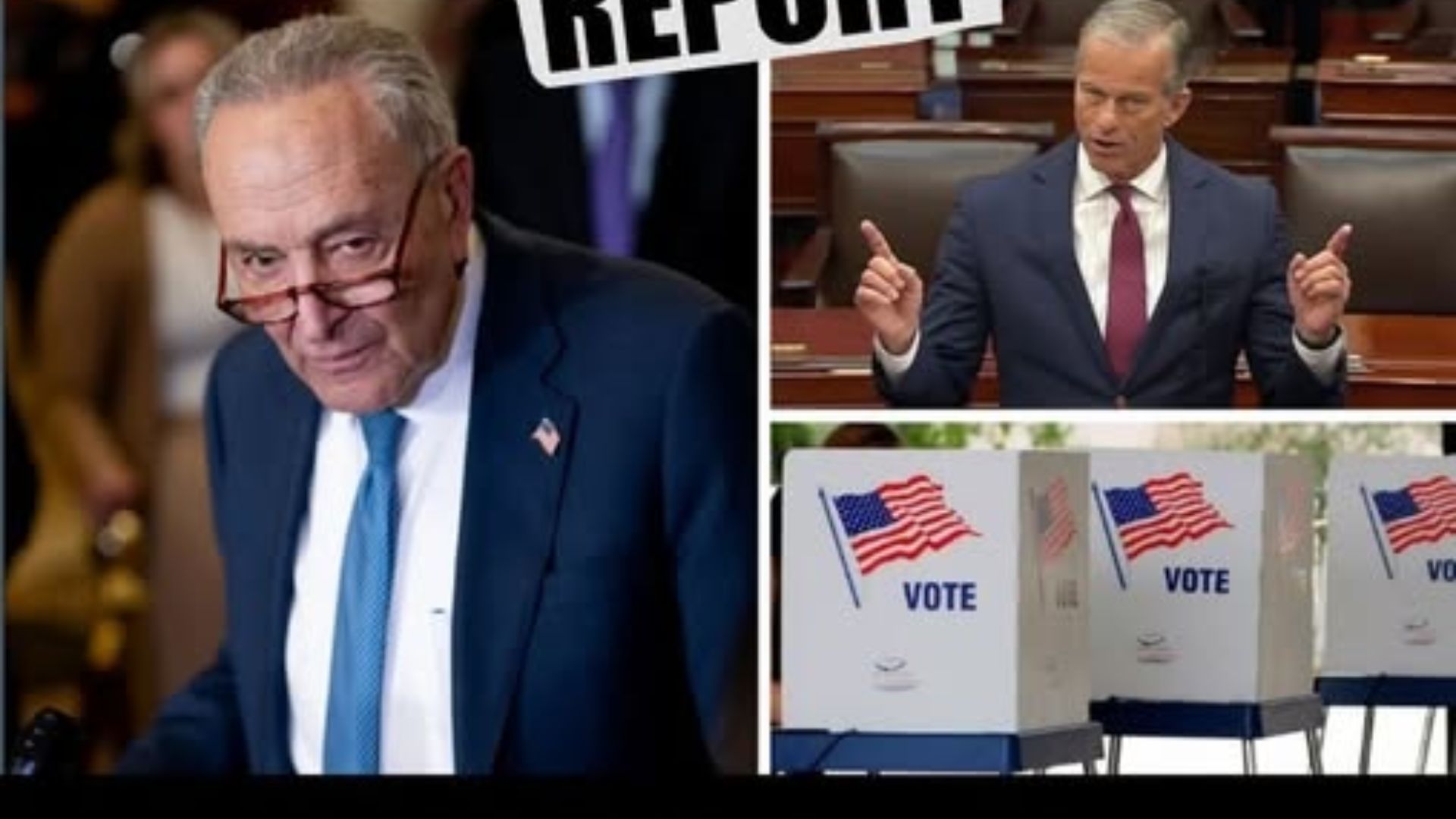
During an appearance on State of the Union, Schumer criticized the bill and pledged opposition. He told host Jake Tapper that Democrats would fight the measure aggressively.
Schumer said Democratic lawmakers would work “tooth and nail” to stop the bill from reaching the desk of Donald Trump. The proposal passed the House earlier with nearly unanimous Republican support.
The debate highlights deep disagreements about voting laws and election integrity. Both parties have offered competing arguments about the bill’s potential effects.
SAVE Act Voter ID Requirements and Republican Support
The SAVE Act voter ID legislation would require voters to show identification when casting ballots in federal elections. Additionally, individuals would need to prove citizenship when registering to vote.
Republican lawmakers argue the measure would strengthen election security. They say the requirements ensure that only eligible U.S. citizens participate in federal elections.
Some Republicans have also argued that existing election systems allow non-citizens to vote. Kash Patel, director of the Federal Bureau of Investigation, referenced the issue during remarks reported on Saturday.
However, Democrats have strongly disputed those claims. They say evidence of widespread voter fraud remains limited.
SAVE Act Voter ID Criticism From Democrats
The SAVE Act voter ID debate escalated when Schumer criticized the proposal during his television interview. He described the bill as an “outrageous proposal” and accused Republicans of political bias.
Schumer also compared the legislation to historical segregation policies. He called the proposal “Jim Crow 2.0.”
Additionally, Schumer argued the law could affect certain voters. He claimed some groups might face difficulties obtaining identification required under the bill.
Critics of Schumer’s position have rejected that argument. They say suggesting certain groups cannot obtain identification is itself problematic.
SAVE Act Voter ID Polling Data and Public Opinion
Public opinion polls have played a role in the SAVE Act voter ID debate. During the interview, Tapper referenced a survey conducted in August 2025 by the Pew Research Center.
According to the poll, 83% of Americans support voter ID requirements. The survey also reported majority support among Democrats.
Support was also strong across multiple racial groups. The poll showed 76% of Black respondents, 77% of Asian respondents, and 82% of Hispanic respondents favored voter identification rules.
Despite those findings, Schumer maintained his opposition. He also raised concerns about hypothetical federal monitoring of polling locations.
SAVE Act Voter ID Debate Extends to Enforcement Concerns
The SAVE Act voter ID conversation also included questions about enforcement. Schumer suggested federal agents could potentially monitor polling locations under certain scenarios.
He also criticized the presence of immigration enforcement agents near voting areas. Specifically, he referred to agents from U.S. Immigration and Customs Enforcement.
Republicans responded to those remarks during the broader debate. Jason Smith, a representative from Missouri, defended enforcement of existing laws.
Smith said non-citizens are not permitted to vote in U.S. elections. He argued that enforcing the law protects the integrity of the voting system.
SAVE Act Voter ID Vote Highlights Political Divisions
The SAVE Act voter ID bill passed the House earlier in the week. Republicans supported the measure almost unanimously.
However, only one Democrat voted in favor of the bill. Henry Cuellar of Texas supported the legislation.
Cuellar represents a border district that is more than 70% Hispanic. His vote highlighted differences within the Democratic Party.
The divide also reflects broader political tensions over immigration and election laws. As the debate continues, the bill faces uncertain prospects in the Senate.